Develop your knowledge of professional chemical peels, skin assessment and safe treatment planning through CPD-accredited skincare training in West Runton, Norfolk.
Professional chemical peels may help improve the appearance of dullness, uneven texture, some blemishes and fine lines, depending on the skin concern and the treatment selected. Safe practice begins with understanding skin anatomy, peel ingredients, treatment depth, contraindications and individual skin responses.
Delivered at our Academy in West Runton, North Norfolk, this in-person course combines relevant theory with practical learning under the guidance of Chloe Mackenzie. You will explore consultation, product selection, application principles, aftercare and recognising complications. Your eligibility to offer particular peel treatments afterwards depends on your prior qualifications, competence, insurance and applicable requirements.
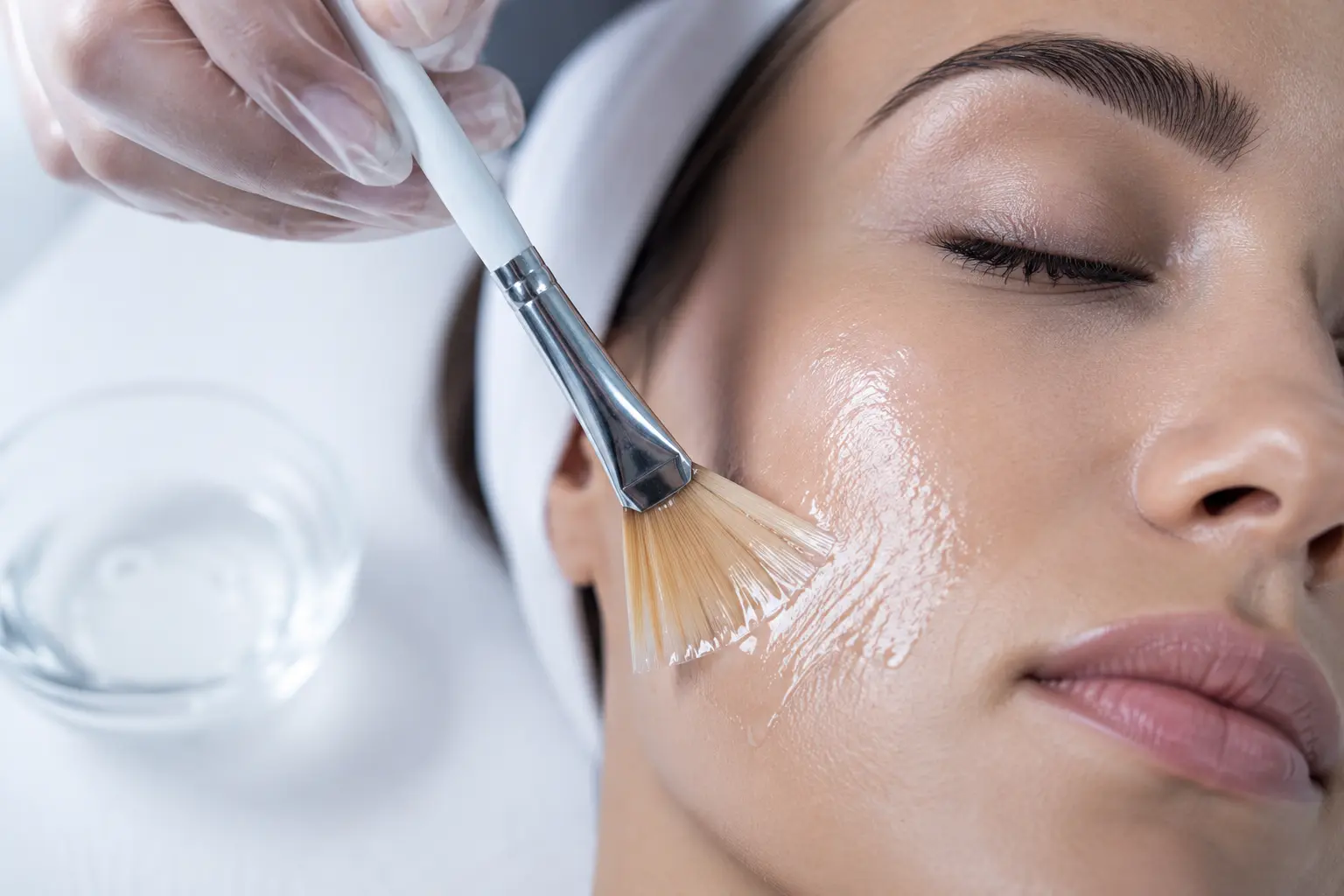
Chemical peels use controlled exfoliation to address selected skin concerns. Effects and recovery depend on peel formulation, treatment depth and individual skin factors; consultation and appropriate aftercare are essential.
Salicylic acid is commonly used in treatments for oily or congested skin. Suitability depends on the client’s skin condition, allergies and treatment history, and results vary.
Selected superficial peels can improve the appearance of uneven texture and dull skin over time. Temporary redness, sensitivity or peeling may occur, and results cannot be guaranteed.
Some peel formulations may help the appearance of particular pigmentation concerns. Melasma and post-inflammatory pigmentation require careful assessment, as unsuitable peels can worsen discolouration.
Different peel depths have different effects, recovery periods and risks. Medium-depth treatments require additional consideration of training, clinical oversight, insurance and applicable rules; this course does not by itself authorise their use.
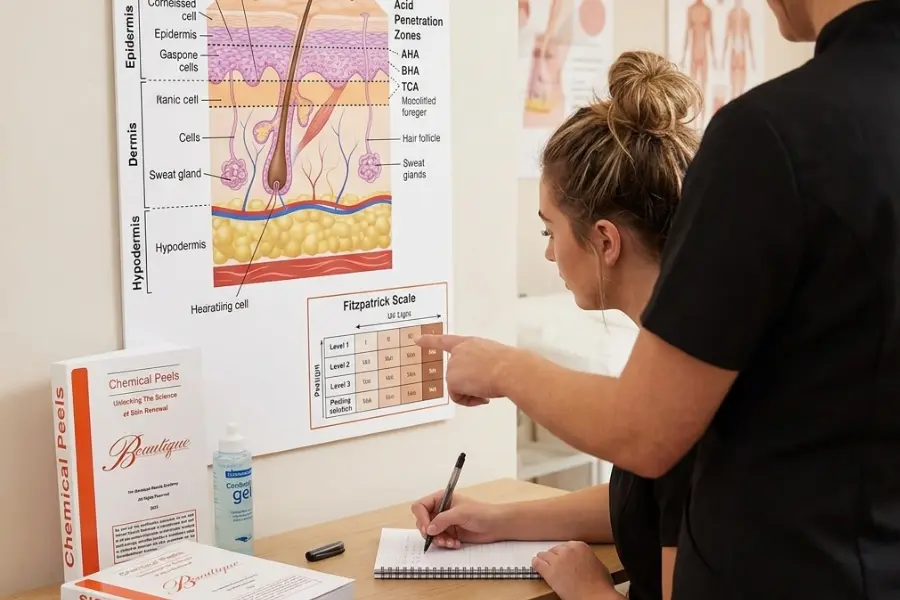
Safe chemical peel practice relies on an understanding of skin structure, ingredient activity and appropriate client assessment. The Academy provides a course handbook as a reference for the topics covered in your training.
The handbook explores peel formulation and strength, consultation and contraindications, product-specific application guidance, aftercare and the recognition of adverse reactions. It supports your learning but does not replace manufacturer instructions, supervised experience or the independent requirements of insurers and relevant authorities.
A comprehensive, advanced breakdown of the practical and theoretical modules included within this CPD-accredited course.
• Structural Chemistry: Understand how AHAs, BHAs and enzyme exfoliants interact with the skin, and discuss TCA and the additional risks associated with deeper peels.
• Anatomy & Physiology: Review the layers of the skin, common skin concerns and assessment across different skin types, including use and limitations of the Fitzpatrick Scale.
• Consultation Protocols: Review consultation, contraindications, informed consent, relevant patch-testing instructions and realistic client expectations.
• Product Knowledge: Compare peel formulations and product guidance, recognising when particular skin concerns require caution or referral.
• Application Mechanics: Study product-specific application and timing guidance, protective measures and appropriate treatment boundaries.
• Adverse Reaction Logs: Learn to recognise potential adverse reactions, follow appropriate escalation procedures and know when to seek urgent clinical advice.
• Post-Care Maintenance: Explain suitable aftercare, sun protection and the importance of following product and practitioner-specific instructions.
• Business & Compliance: Understand the need to check insurer acceptance, treatment scope, relevant local requirements and appropriate business records.
Designed for qualified beauty therapists and relevant healthcare professionals, subject to checking existing training and experience. Practical activities are supervised and depend on the course programme, model suitability and availability. Please confirm entry requirements and treatment scope before enrolling.
Clear answers regarding chemical peel facial parameters, academy accreditation pathways, and support logs.
The course explores superficial peel principles, including alpha hydroxy acids (such as glycolic and lactic acids), beta hydroxy acids (such as salicylic acid) and enzyme exfoliation. We also discuss TCA and the additional risks of medium- and deep-depth peels. Any practical treatment is limited to the student’s suitability and the confirmed course scope.
This course is intended for qualified beauty therapists and relevant healthcare professionals. The Academy reviews previous qualifications and experience before confirming eligibility. Course admission does not automatically qualify a student to perform every type or depth of peel.
Successful completion provides a CPD-accredited training certificate, not an automatic entitlement to professional insurance or independent practice. Insurers assess your existing qualifications, experience, treatment type and peel depth separately. Check eligibility and obtain written confirmation of appropriate cover before treating clients.
Training takes place in person in West Runton, combining theory with supervised practical elements as appropriate to the course and available models. Please confirm the session duration and practical arrangements before enrolment. Post-course educational guidance may be offered according to the course arrangements; it is not an emergency clinical advice service.
Build your understanding of chemical peel treatments through practitioner-led training in Norfolk. Please check eligibility, practical scope and insurance requirements before enrolling.
Access Academy Enrolment Portal